Tuesday, December 13, 2011

The Dog Park

This week we took a fun little trip to the Macon Dog Park that is located near campus. We were actually able to see it in use, because there was a girl there with her two dogs. They certainly seemed to be enjoying it. We learned that there are both positives and negatives to having dog parks, especially in a city like Macon.

Good Things About Dog Parks
*It can increase the sense of community, especially in larger cities where people may not have the opportunity to get to know others so readily. Going to a dog park allows you to meet people who have a similar interest to you (pets/animals).
*It can often clean up a bad community. Gangs and troublemakers are not going to want to "work" in an area that is highly populated/used by people, especially families. Having a dog park can act as a deterrent to people who could otherwise use that empty space for negative activities.
*It provides an open space for the dogs to run and play, so they are able to get good exercise and have time to interact and play with other dogs. Many people in urban areas like Macon do not have big back yards, so the dog park is the only place for their pets to really have space to play.

Bad Things About Dog Parks
 *It is much more likely that dogs who play in dog parks will be exposed to diseases, like worms or parvo.
*If the water source is connected to the city water source, then it can lead to water contamination.


Overall, I do think that dog parks in urban areas are a good thing. I come from a small town where they aren't really necessary, but I can definitely see how it would be important in a city like Macon.

Monday, December 12, 2011

Hitchiti Forest

This week the class visited the Hitchiti Forest and went hiking on the trail that is located there. The forest occupies a total of over 4,000 acres of land north east of Macon. Information about the Forest can be found at the Georgia Forestry Commission website:

http://www.gatrees.org/forestmanagement/brender.cfm

One of the things that we discussed while on the trail was the presence of Wild Ginger in the forest. Wild Ginger grows in forests all over North America and has many uses, including for medicinal purposes.

This is a picture of the large Wild Ginger leaves growing in a dense forest.

Jackson Springs Park

This lab was a lot of fun. I got to learn a lot about Geology that I had never even thought about before, and it was nice to do some exploring. We visited Jackson Springs Park, and lovely little park in Macon that I had no idea even existed. It was a beautiful place and I can definitely see myself visiting the park again in the future. The primary purpose of this lab was to study Geology and Trees, but we also learned a little bit about the not-so-nice history of Macon. Jackson Springs is what remains of the historically white, wealthy area of Macon. The city was once heavily divided into three main areas, or neighborhoods. Jackson Springs was upper class, and there was another for middle class citizens, and another for the lower class citizens, which included primarily black people. The socioeconomic divisions of the city were actually manifested physically by the division into well known neighborhoods that were rarely ever crossed.

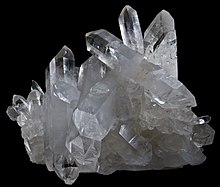
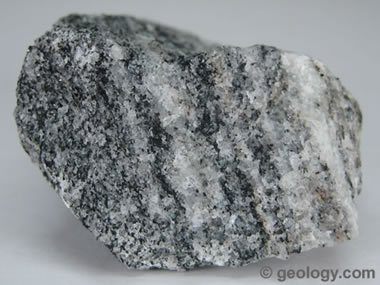
While at the park we studied various types of rocks and tried to find samples of them. Some of the types that we found were:

Quartz

Feldspar

Granite

Sandstone

Gneiss


I really enjoyed this lab because I was able to learn how to identify various types of rocks and trees in nature on my own. We also found (and named) two baby frogs.

Ocmulgee National Monument

This week we visited the Ocmulgee National Monument and were able to learn a lot about the history of the area. One thing that I did not know about the history of Macon is that the city was founded on the Fall Line of the Ocmulgee River. Fall Lines are areas located between an upland region of hard rock and a coastal plain of soft rock. These areas were quite popular for settlements because of the increased amount of resources that can be found around Fall Lines. I never knew much about the Ocmulgee River, other than that it is a tributary of the Altamaha River, which I grew up on. It was interesting to learn how important the River and the Fall Line were in motivating the settlement of the area.

We also spent a great deal of time hiking the area and looking at the mounds. We were able to enter the Earth Lodge, but the lack of space and ventilation made it difficult to stay for more than just a minute.

We were also able to hike to the top of the Great Temple Mound, which is actually much higher than it seems. From the top were able to get a wonderful view of downtown Macon, part of Mercer, and the entire Ocmulgee National Monument Park.


I had a really great time at this lab because I was able to learn some things about Macon that I had never known before. It really helped give me a new perspective on the city and what it once was.

Negative Feedback Loops

Negative feedback loops involve the process by which particular factors change, but ultimately reach homeostasis (or constant levels that are considered normal). Negative feedback loops happen all throughout nature, in plants and in animals. In humans we often see Negative feedback loops in relation to blood sugar or body temperature, or other similar physical factors.

In class we used the example of blood sugar to demonstrate how negative feedback loops work. Dr. Rood tested his blood sugar at the beginning of class, and then consumed a soda and a candy bar before testing his blood sugar again. The graph below shows how his blood sugar levels changed.


There was a clear increase in blood sugar in the minutes following Dr. Rood's consumption of the junk food. However, his body was able to recognize the spike and prevent the levels from becoming dangerously high. A negative feedback loop slowly occurred, in which his body brought the levels back down to normal. His body had reached homeostasis, and he was in no danger of becoming sick due to the intake of sugar. However, if Dr. Rood had been diabetic, then his body would not have been able to properly control the blood sugar level and reach homeostasis, which would have put him at risk of illness.

Sunday, November 20, 2011

Community Gardens and Soil Types

I had no idea that there was a community garden located just down the street from campus, but I was pleased to see it. The garden was established through the Macon Roots program. You can visit their website here:

http://www.maconroots.org

They are a non-profit organization striving to promote sustainable food in Macon. The celebrate the use of local food, and help to provide locally grown products to the people of Macon.


One reason why community gardens are so important is because they help provide healthy food options to people who may not have access to it otherwise. In urban areas people tend to rely more on take-out menus and processed food from the microwave because they do not have the space or knowledge to grow their own products or the time to create home-made meals every day. Community gardens help provide people with the tools they need to lead healthier lives, even just by taking small steps.


However, there are also downsides to community gardens that are located in urban areas, such as Macon. Many of these gardens are located in areas that either are or have been subjected to various pollutants and chemicals from the surrounding areas. This can cause contamination in the soil where the fruits and vegetables are being grown. It is important for these areas to be checked for safety and to be monitored closely, because even the slightest contamination can ruin the entire garden and make the products unsafe for consumption.

As part of this lab we also studied dirt, clay, and soil and were asked to research the 12 soil orders. The different types of soil are located all over the world and each possesses unique qualities. While you or I may not be able to tell them apart, environmental biologists have tests that allow them to distinguish between them. The 12 types are:
Gelisols, Histosols, Spodosols, Andisols, Oxisols, Vertisols, Aridisols, Ultisols, Mollisols, Alfisols, Inceptisols, and Entisols.


Of these 12, the one that is found in Georgia is Ultisols.

Tomato Baby

One of our assignments for the semester has been to raise or own "baby", in the form of either a tomato or a sunflower. I chose to attempt a tomato, and I was surprised with how well my baby flourished. Unfortunately, I don't have a working camera to document my the plant's growth, but it has gotten quite tall, to the point that it is unable to stand up without being propped against something. It appears to be suffering lately, with the lack of sunlight available and my occasional forgetfulness in watering it. Hopefully I can actually get a tomato out of it, but we'll see how it goes from here!